Full Review
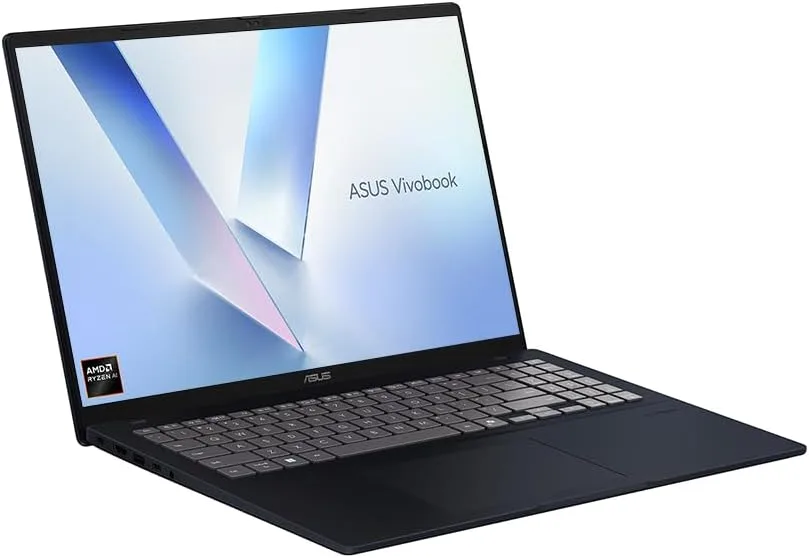
The Asus Vivobook 16, a budget laptop that promises a lot for its £680 price tag. The first thing that caught my attention was the 16-inch display, which is a rare find in this price bracket. The 1920x1200 resolution is decent, but the screen itself is a letdown - colours lack vibrancy and the viewing angles are poor. This is a shame, as a good display can make a real difference to the overall user experience.
The laptop is powered by an AMD Ryzen 7 7730U processor, which is a capable chip that handles everyday tasks with ease. I've found that it can handle multiple browser tabs, email, and office work without breaking a sweat. However, I did notice that it can feel slow at times, especially when switching between resource-intensive applications. The 16GB of RAM helps to mitigate this, but it's clear that the processor is not always running at its best. For developers and students, this laptop should be sufficient for coding, writing, and research, but it may struggle with more demanding tasks like video editing.
The build quality of the Vivobook 16 is another area where Asus has made some compromises. The smudgy black plastic build does not inspire confidence, and the laptop feels flimsy in the hand. The trackpad is also a disappointment, with a rough surface and inconsistent tracking. The speakers are similarly unimpressive, producing tinny sound that lacks bass. The webcam is also poor, with a low resolution and lacklustre image quality. These are all areas where Asus could have done better, especially considering the laptop's price.
In terms of connectivity, the Vivobook 16 has a decent selection of ports, including three USB-A ports, a single USB-C port, and an HDMI 1.4 port. This should be sufficient for most users, although the lack of newer ports like USB-C with Thunderbolt 3 may be a drawback for some. The headphone jack is also a welcome inclusion, allowing users to plug in their favourite headphones. For commuters, the laptop's port selection should be sufficient for connecting to external displays and peripherals.
The battery life of the Vivobook 16 is a major concern, with up to 6 hours of use on a single charge. This is well below the average for laptops in this class, and it means that users will need to be careful with their power management. For long writing sessions or coding marathons, this laptop may not be the best choice. The lack of weight specification also makes it difficult to judge the laptop's portability, although it's clear that it's not the lightest laptop on the market.
For content creators, the Vivobook 16 has some major drawbacks. The display is not colour-accurate, the speakers are poor, and the webcam is subpar. While the processor and RAM are capable, they are not sufficient to make up for the laptop's other shortcomings. For this group, I would not recommend the Vivobook 16, as there are better options available for not much more money.
My verdict on the Asus Vivobook 16 is clear: it's a budget laptop with some major compromises. While the price is attractive, the laptop's poor display, build quality, and battery life make it a difficult recommendation. If you're looking for a cheap laptop for basic tasks, the Vivobook 16 may suffice, but for anyone who needs a reliable laptop for demanding work, I would look elsewhere.
Buy the Asus Vivobook 16 on Amazon for £679.99.